
What’s Your Love Language? Understanding How We Give and Receive Love
Love is a universal language, but we all express and receive it in different ways. This post explores the five love languages and how understanding them can help you feel more loved and love others in ways that best touch their hearts.
HEALTH & WELLNESS MADE SIMPLE
Sheri Anne Maximille Cabañes-Madayag
2/21/20268 min read


Disclaimer: This blog post is based on personal and professional experience and is intended for informational and educational purposes only. This is not a substitute for professional clinical advice, diagnosis, or therapy. Always consult with a professional for specific questions or concerns regarding your mental health or relationship concerns.
“Love is the universal language.”
We often hear this quote from people–authors, influencers, beauty queens, and even our next-door neighbor.
We may come from different countries and cultures that speak different languages, but love transcends all of these.
But did you know that, despite being the universal language, “love” can also be expressed in different languages?
In this post, we will explore love languages and how understanding them can help improve our relationships.
What We'll Explore in This Reading
How To Know Your Love Language
Why Understanding Love Languages Matters
Moving Forward, Loving Better
Love Languages Explained
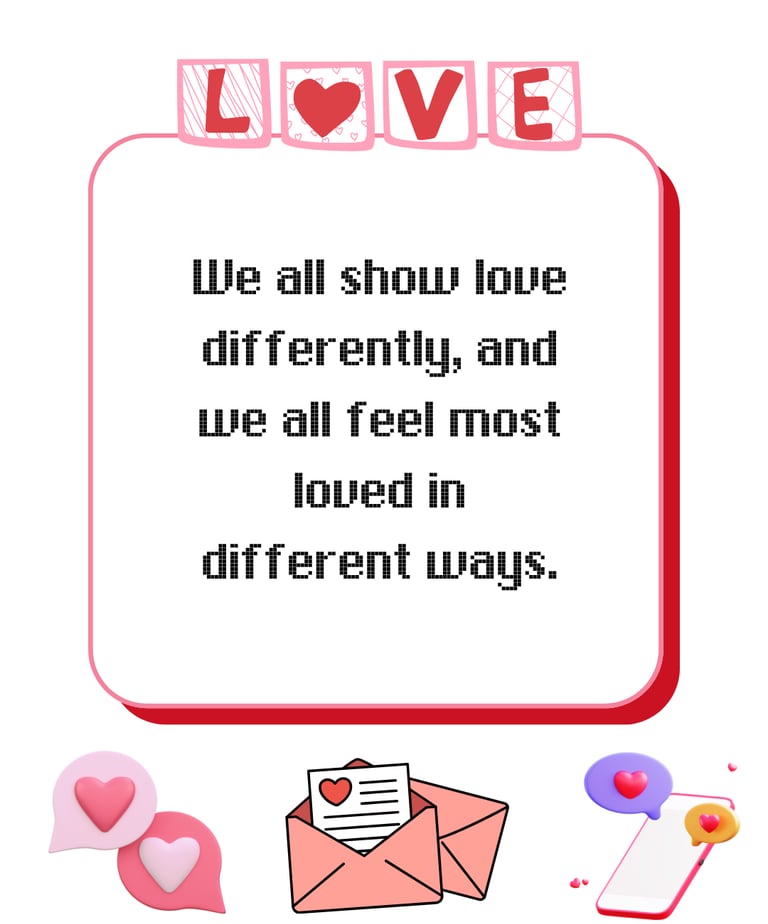
Love languages are different ways people give and receive love. Just like people from different countries speak different languages, we all show love differently, and we all feel most loved in different ways.
Dr. Gary Chapman is an author, speaker, and marriage counselor who is best known for developing the “5 Love Languages” concept. In his years of counseling experience, Chapman identified five main ways people express and receive love.
Let’s explore the five love languages together.
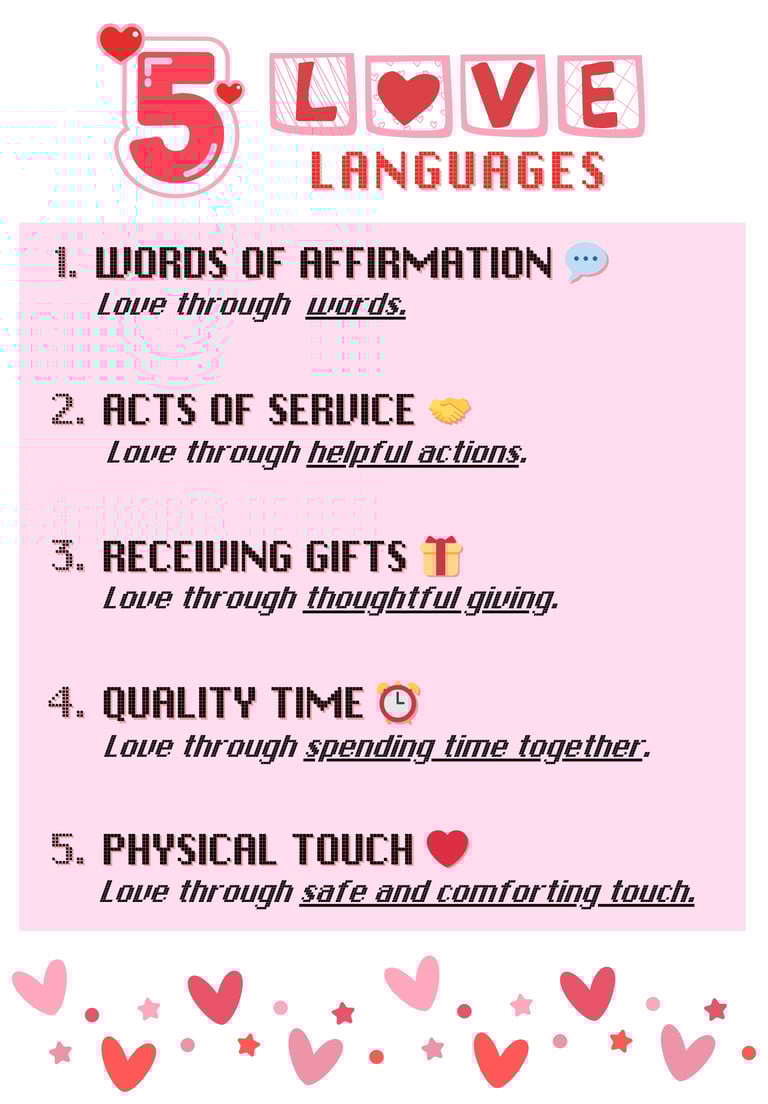
1. Words of Affirmation 💬
People with this love language feel and express love through kind and encouraging words. Words are powerful for people whose love language is words of affirmation.
If this is your love language, show appreciation when people say kind words to you. Open up to your loved ones when you feel hurt by their mean or harsh words.
To show love through words of affirmation, simply speak kindly, give compliments, and supportive words, such as I love you”, “Thank you”, and “Great job!” Avoid saying mean or careless words because it can hurt them deeply.
2. Acts of Service 🤝
Some people express love through helping and feel most loved when someone helps them. Actions speak louder than words for those whose love language is acts of service.
If acts of service are your love language, always say thank you to show your appreciation when others help. It’s also okay to ask for help when you need it.
To show love through this language, offer to help in simple ways without being asked. This can include helping with homework, cooking a meal, or sharing house chores.
3. Receiving Gifts 🎁
People whose love language is receiving gifts are often mistaken for being materialistic. But loving through giving and receiving gifts is not about expensive things. I should know because this is my love language.
For us with this love language, we care more about the thought behind the gift than the price. Any gift that says, “I was thinking of you,” means a lot to us. When I see the gifts, I remember the person who gave them and the occasion they were given.
If you are like me, whose love language is receiving gifts, it’s okay to value meaningful gifts, but you don’t need to hoard stuff. I struggle with letting go of things that were gifted to me, even if they’re broken and cluttered in the house. I shift my mindset to value the person and the memory and not the gifts, so it would be easier for me to let them go.
To show love to someone with this love language, simple gifts are appreciated as long as you choose with care and love. These gifts could be as simple as a small note, a favorite snack, or even a souvenir item from a trip. Gift cards and cash are okay, just add a small note, like “Here’s a spa gift card to pamper yourself,” or “Add this to the money you’re saving to buy a new phone,” to make it even more special.
My husband would give me cash with the note “For your self-care fund.” I have a “self-care fund” that I use to treat myself or buy something I want, and I really appreciate my husband’s support.
4. Quality Time ⏰
People with this love language express love and feel most loved through spending quality, “focused” time with loved ones. I added “focused” because spending time but getting distracted by phones doesn’t count. For people with quality time as their love language, it’s not about the length of time spent with them, but more about how present you are.
If quality time is your love language, don’t be afraid to ask your loved ones for time together, even just lunch or dinner. Always thank them for spending time with you.
To show love through quality time, spend time doing activities you both enjoy, and put distractions (phones) away. Some examples include listening with full attention, playing together, and sharing a meal.
My kid seems to have this love language because she throws tantrums when we use phones during playtime, so we make sure to put our phones away and enjoy playing with her.
5. Physical Touch ❤️
People with this love language express love and feel most loved through safe and comforting touch. A gentle touch can bring calm and reassurance, especially during difficult moments.
If your love language is physical touch, remember that not everyone is comfortable with hugging or physical touch. Communicate to them that hugging or any safe physical touch makes you feel loved, and ask first for their permission. Loving physical touch should always feel safe and comfortable. Always respect boundaries and personal space.
To show love through physical touch, offer to sit beside a person or ask if you could hug them. They may feel loved through physical touch, but it is still important to respect boundaries by asking permission.
How To Know Your Love Language
To know your love language, reflect on how you usually show others you care about and love them. Think about what your loved ones did that made you feel extra special and so much loved.
I first learned about loved languages in college when I was studying nursing. Before, I thought that I was just materialistic because I sometimes feel sad about not getting gifts. When I learned about love languages, I took a test and found that my top love language is receiving gifts. And it makes sense because I always appreciate every gift I receive, even donations like hand-me-down clothes from relatives. I also enjoy wrapping presents for my family and friends during Christmas and birthdays.
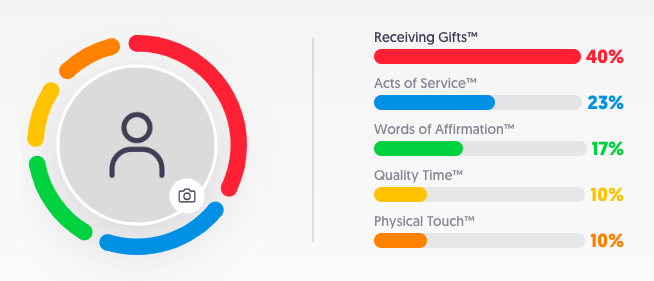
My recent test, as I write this, shows that my top love language is still receiving gifts, and acts of service come next.
It’s normal to have more than one love language. Our love languages can also change over time as we grow and mature through our experiences. If you want to take the test to know your love language, click here.
Why Understanding Love Languages Matters
Have you ever felt like your loved ones don’t appreciate your efforts to show them you care for and love them?
Or did you feel like they don’t love you even if they said so?
Most relationship problems are not because people don’t love each other, but because they speak different love languages.
In my experience, my family thought I was materialistic and selfish because I feel sad when I don’t get gifts on my birthday. But in fact, I just wanted to feel loved through receiving simple gifts.
When we talked about love languages, we discovered that we had different ways of expressing love and feeling most loved. I understood that they found it difficult to give me a gift because they thought the gifts had to be expensive. I told them that I appreciate simple gifts. So, on my birthday last year, I got a cake from my mom, my favorite “chicharon” from my uncle, and cash for my “self-care fund” from my husband.
I also try to express love to my loved ones in a language that they understand best. My mom and my husband's top love language is acts of service, so I always offer to help them or do random acts like making them coffee or tea. My kid feels loved through quality time, so I put my phone away when I’m with her.
Learning our own and our loved ones’ love languages helps improve relationships. When we know our own love language, we can communicate to our loved ones how we feel most loved. Knowing our loved ones’ love languages helps us show we love them in ways they feel most loved.
💕A Gentle Reminder 💕
While learning about love languages can help improve relationships, some relationship problems require intervention beyond understanding love languages. Love languages work best in healthy relationships where both people genuinely respect and love each other. If you are experiencing serious concerns such as physical abuse, substance abuse, or other harmful situations, please consider seeking professional help for proper evaluation, therapy, or even legal actions.
Moving Forward, Loving Better
Love is something we give and receive. Each person is unique. We have different personalities, including how we express love and feel loved. Understanding each other's love languages builds stronger and better relationships.
There is no perfect or best love language. All five love languages are important ways of showing our love and making us feel loved.
We don’t need to be a relationship expert and master the five love languages to love better. It’s about having an open mind and a willing heart to understand ourselves and our loved ones. It’s having open and nonjudgmental communication about how we can show love in ways that truly reach the heart.
After all, love is not just a feeling, but a universal language spoken from the heart and meant to be shared with others.
What’s your love language?
What are the love languages of the important people in your life?
Now that you know about love languages, what steps are you taking to build better relationships?
I’d love to hear your thoughts. Please feel free to reach out through my contact page.
Note: This post is for informational purposes only and is not a substitute for professional advice. Please speak with a qualified professional about your specific mental health or relationship concerns.