
Recharging Your Social Battery: A Quick Guide for Introverts
As an introvert, I know that “happy but tired” feeling after social events. In this post, I share my personal experience as an introvert and practical ways I recharge my social battery. If you or someone you know often feels drained after social gatherings, this guide is for you.
HEALTH & WELLNESS MADE SIMPLE
Sheri Anne Maximille Cabañes-Madayag
1/18/20267 min read


Disclaimer: This blog post is based on personal and professional experience and is intended for informational and educational purposes only. This is not a substitute for professional medical advice, diagnosis, or treatment. Always consult with your healthcare provider for specific questions or concerns regarding your health.
Last year’s Holiday season was super busy. Shopping for gifts. Christmas parties. Get togethers. So many back-to-back gatherings.
It may not seem like a lot, but for an introvert like me, just thinking about how much I need to go out already feels exhausting.
If you’re also an introvert, I bet you understand what I’m talking about. I wrote this post to share how I “recharge” after getting “drained” from going to social gatherings.
Here’s What You’ll Learn in This Post:
Confessions of a Life-Long Introvert
Have you ever felt that strange “happy-but-tired” feeling after social events? Or the feeling of relief, with a slight touch of guilt, when plans to go out get cancelled? On a weekend, would you rather stay home and read a book or watch TV than go out?
That’s me since I was a kid. I first learned that I may be an introvert from one of my teachers. As I studied nursing, I learned more about being an introvert. And I totally agree that I am one.
It’s not that I don’t want to interact with other people. I still enjoy going out to bond with family and friends. I still attend social gatherings, like parties. I still go out on trips to other places. But as an introvert, I would need time to rest between events because I feel tired afterwards.
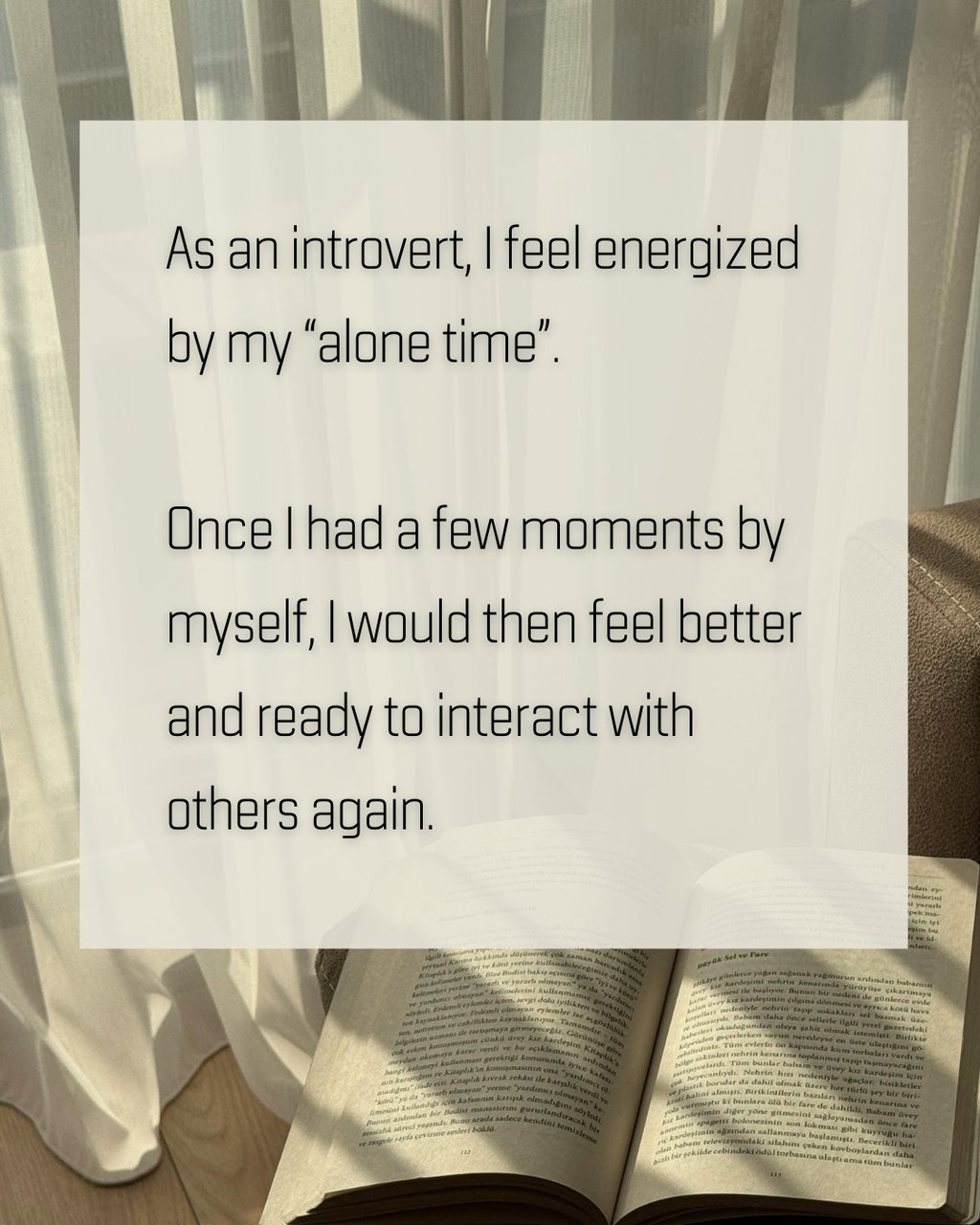
As an introvert, I feel energized by my “alone time”. I would usually stay in my room, read a book, or write my thoughts in a journal. I also like to meditate and reflect on my thoughts. Once I had a few moments by myself, I would then feel better and ready to interact with others again.And the cycle repeats. This is my life as an introvert.
Introverts and Their “Social Battery”
An introvert is a person who feels energized by solitude, focuses on inner thoughts, and prefers calm environments. An introvert enjoys deep conversations with a few people rather than attending huge events.
Let me just clarify that introverts aren’t shy or antisocial. Unlike extroverts, who feel energized from being around people, introverts exert more effort when interacting with others. Neither is better nor worse; we are all just wired differently.
As an introvert nurse, I genuinely care about my patients and their families. I always try my best to make them feel better because helping others makes me feel good. But after each shift, I noticed that I feel so exhausted, not just physically but also mentally and emotionally.
At first, I thought it was just because of my job as a nurse. But when I switched careers, I realized that I always feel drained after going out for errands, meeting friends and family, or attending parties and events.
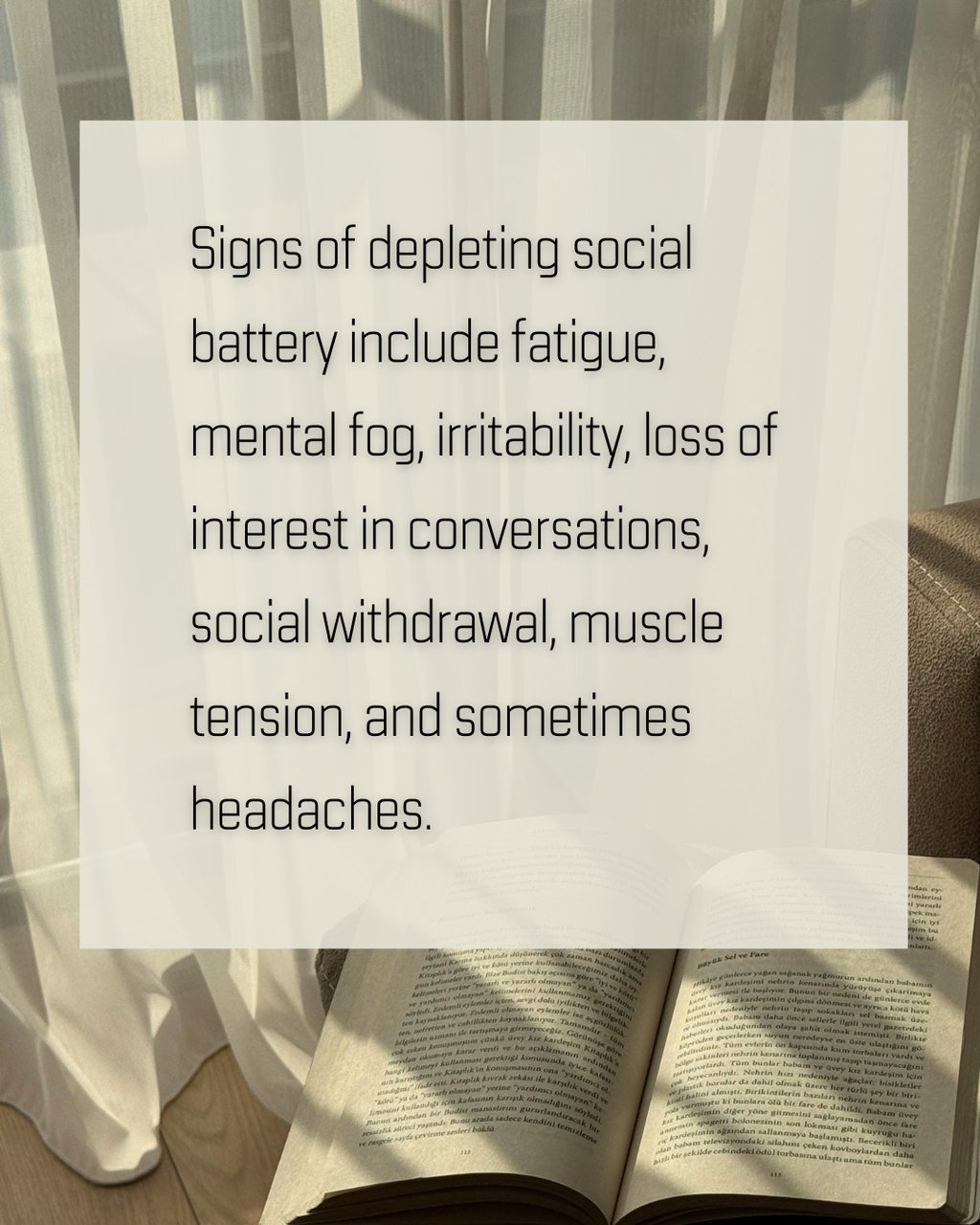
Introverts, like me, have a social battery, or the amount of energy available for social interactions. Introverts expend energy during social interactions, from small talks to large gatherings. Constant socialization can be exhausting and draining for introverts. Signs of depleting social battery include fatigue, mental fog, irritability, loss of interest in conversations, social withdrawal, muscle tension, and sometimes headaches. To regain energy, introverts need time for solitude, calm, and reflection.
Practical Ways to Recharge Your Social Battery
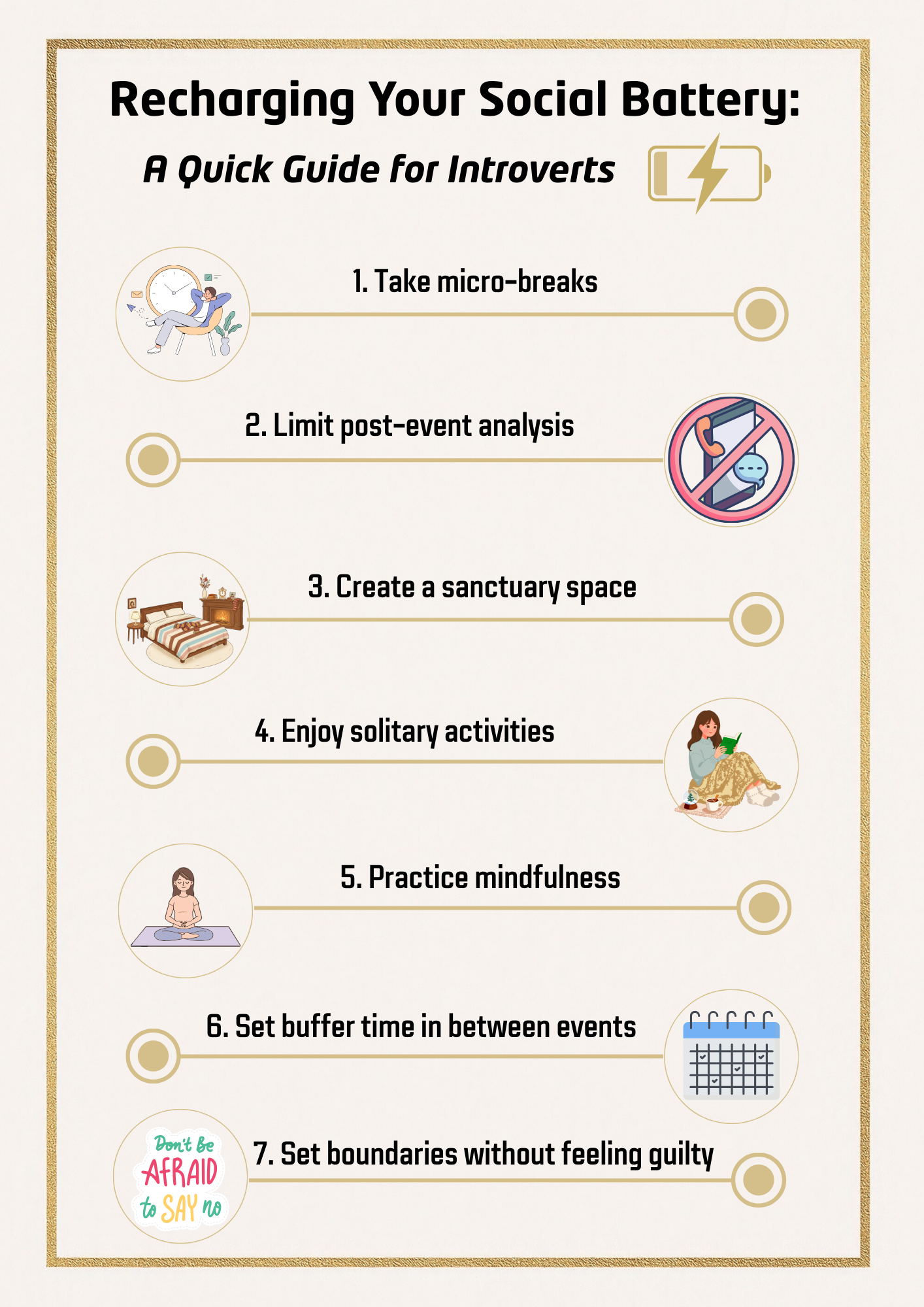
1. Take micro-breaks
During social interactions or events, take short breaks by stepping away from people for about 5 minutes. Step outside or to a spot with fewer people and take deep, calming breaths. Just make sure to politely excuse yourself to the people you’re with before stepping away.
I do this by excusing myself to go to the bathroom or to step outside to reply to an email or a text. In the bathroom, I would close my eyes and think about encouraging words to myself, like “You’re doing great.” I also think of a little reward for myself after the event, like a book I would read or a cup of coffee when I get home. When I step outside, I take deep breaths and look at an interesting object - a plant or a painting, to take a break from people.
2. Limit post-event analysis
It’s normal for introverts to replay events and analyze what happened. Sometimes, the social interaction doesn’t stop when you’re with people. The conversation continues through messaging apps to discuss the earlier events and plan for the next one. These can also drain the social battery.
In this case, send a quick and polite reply like, “Thank you, I had a great time. I look forward to seeing you again. Let’s plan our next get-together in a few days (weeks or so). I just got home, and I’d like to rest for now.” Just remember to send a follow-up message to plan the next meeting, if you agreed on it, when you’re ready. Log off from social media or mute notifications from messaging apps until after you’ve rested.
When your mind starts replaying and analyzing the earlier event, shift your attention to something calming, like relaxing music, a warm shower, a comforting scent such as lavender, or even a cup of tea or coffee. I always take a shower after the event to calm myself and prepare to rest.
3. Create a sanctuary space
Having a physical space for relaxation signals the brain to enter “recovery mode.” Set a spot in your home where you can relax after a social event. It does not have to be elaborate. It could be a chair, a couch, or even your bed. The bed is my go-to spot to relax after an event. I take deep breaths and read a book to recharge.
4. Enjoy solitary activities
One of the traits of introverts is enjoying alone time. Embrace your solitude with hobbies that gently engage the mind. Try reading, writing, gardening, drawing, cooking, or walking alone in nature. These hobbies help reconnect with yourself and recharge your social battery.
I always set aside time for reading or writing, even just for 15 to 30 minutes a day. These make me feel calm and in a better mood to spend time with others, especially my family.
5. Practice mindfulness
Spending time alone with your thoughts calms the nervous system and develops self-awareness. Being self-aware helps you understand your thoughts and energy patterns and manage future social interactions better. Some mindfulness activities for introverts include deep breathing, meditation, and journaling.
I practice yoga exercises 2-3 times a week. I also journal daily to help me process my thoughts. Praying is my best meditation practice because it restores my peace, strengthens my faith, and maintains my spiritual health.
6. Set buffer time in between events
Going to one event immediately after another depletes an introvert’s energy. Avoid scheduling back-to-back social events, if possible. Allow yourself transition times in between events. The buffer time lets you recover after a social event and prepares you for the next one.
As much as possible, I plan my events at least two weeks ahead of schedule. I make sure to alternate between one weekend where I attend an event and the next weekend where I stay home. This allows me enough time to rest and recharge before the next event.
7. Set boundaries without feeling guilty
Setting boundaries is not selfish, but rather an act of self-care. It’s okay to decline an invitation if you don’t feel well or leave an event early when you feel exhausted. People who truly care about you would understand and respect your need to rest and spend time alone.
I have a hard time saying no to invitations, even if I feel too tired to go out and socialize. But this time, I am slowly learning to choose myself. I started by planning events with my family. I communicate to them my need to have rest days in between events. They are very considerate of my need for some time to recover because they also want me to be at my best when spending time with them.
A Few Reminders
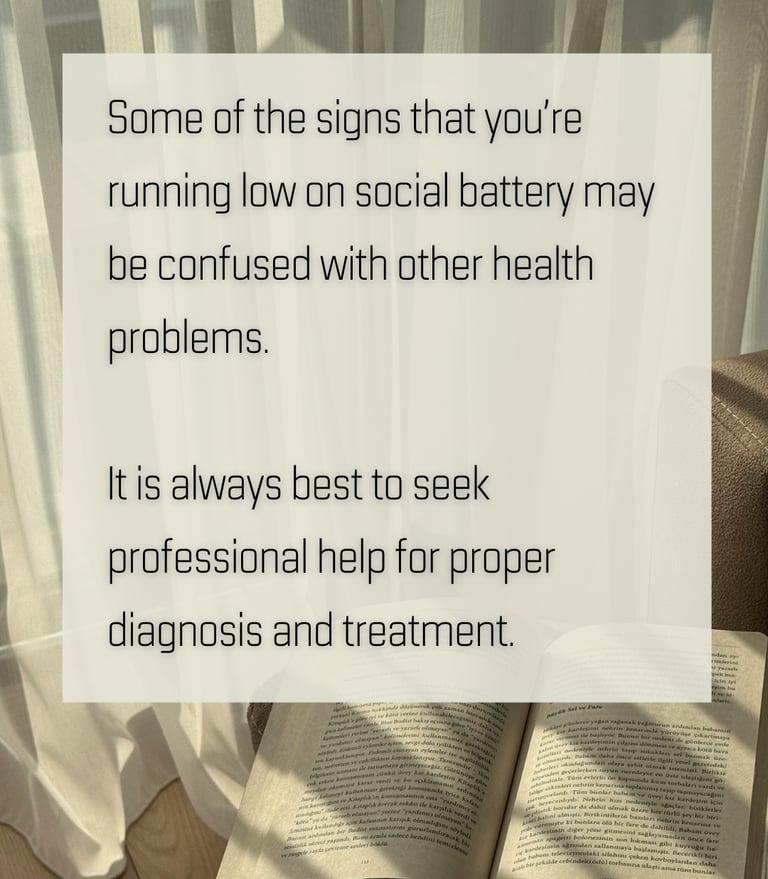
The practical ways to recharge I mentioned above have worked for me for years. Just a gentle reminder that some of the signs that you're running low on social battery may be confused with other health problems. If you experience persistent fatigue, muscle pain, or headaches despite having rested from social events, consult your healthcare provider for a more appropriate evaluation. Frequent withdrawal from social events and isolation can signal an underlying mental health problem. It is always best to seek professional help for proper diagnosis and treatment.
Balancing Solitude and Socialization
I have always viewed my introversion as a weakness that I need to overcome. I don’t want to be perceived as a “loner” or “antisocial”, so I tried so hard to be more outgoing and sociable. I always say “yes” to invitations, even if I’m too tired or not feeling well, because I feel guilty about declining them. I ended up feeling exhausted, resentful, and confused after every social event.
When I decided to work from home, I met fellow virtual assistants and copywriters who are also introverts. This made me realize that I am not alone. I slowly learned more about myself and came to accept my introverted nature. That I can balance enjoying other people’s company and spending time alone with the ways mentioned above.
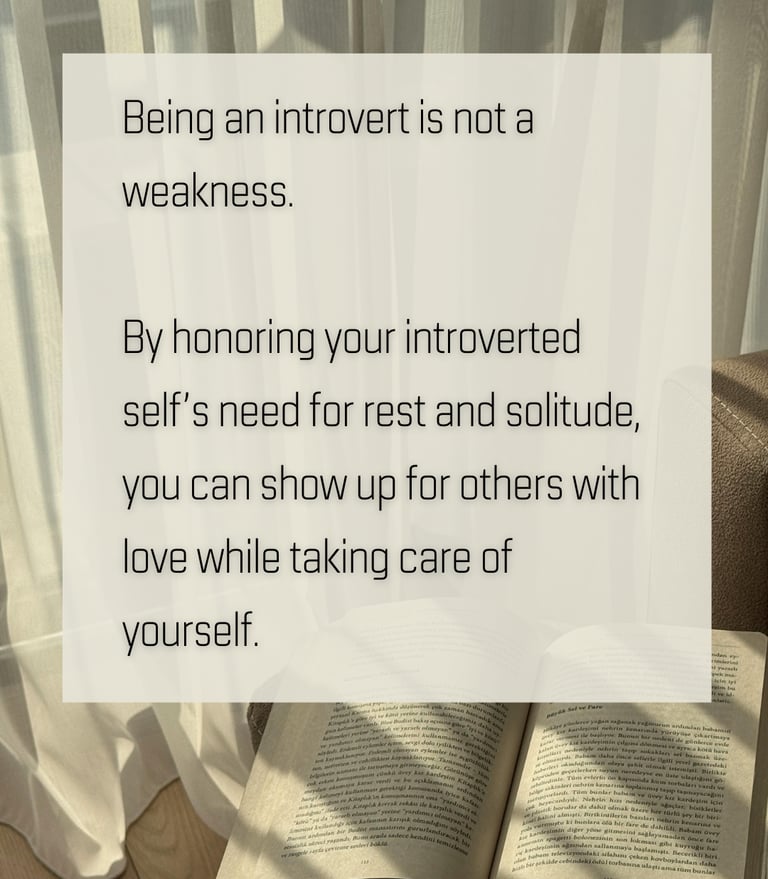
Being an introvert is not a weakness. It’s just how we’re wired. Our brains exert more effort when socializing and in stimulating environments. By honoring your introverted self’s need for rest and solitude, you can show up for others with love while taking care of yourself.
What helps you recharge after social events? I'd love to hear what works for you. Feel free to reach out through my contact page.
Note: This post is for informational purposes only and is not a substitute for professional medical advice. Please speak with your healthcare provider about your specific health concerns.