
Living Through the Sneezes: Practical Tips to Manage Allergic Rhinitis
Living with allergic rhinitis can be frustrating, especially when constant sneezing gets in the way of daily life. In this post, I share evidence-based, practical, and nurse-approved tips to help you manage allergic rhinitis symptoms and breathe easier.
HEALTH & WELLNESS MADE SIMPLE
Sheri Anne Maximille Cabanes-Madayag
10/26/20254 min read


Disclaimer: This blog post is based on personal and professional experience and is intended for informational and educational purposes only. This is not a substitute for professional medical advice, diagnosis, or treatment. Always consult with your healthcare provider for specific questions or concerns regarding your health.
‘Tis the season of “Achooo!” for me. 🤧
I struggle with allergic rhinitis during the cold weather. Now that the rainy season and the cold weather in my country have started, the tissue box never leaves my side.
That constant sneezing and runny nose can feel exhausting. It is also frustrating when it interferes with our daily lives. As I write this blog post with a tissue box beside me, let’s explore practical ways to manage allergic rhinitis.
What this blog post covers:
What is Allergic Rhinitis?
Allergic rhinitis, also called “hay fever”, is an allergic reaction to harmless substances or particles in the environment called “allergens.” It happens when the body’s immune system overreacts to allergens, like pollen, dust mites, pet dander, or mold. Instead of ignoring these harmless substances, the body’s immune system sees them as threats and releases chemicals, like histamine, causing the following symptoms:
Sneezing
Runny or stuffy nose
Itchy or watery eyes
Postnasal drip (that annoying “drip” at the back of the throat)
Scratchy or sore throat leading to coughing.
It’s like the body’s immune system being overly protective, like when a security alarm goes off when seeing the known visitors as strangers posing a threat.
The symptoms of allergic rhinitis can certainly impact quality of life. The good thing is that there are practical ways to manage it.
Practical Tips to Manage Allergic Rhinitis
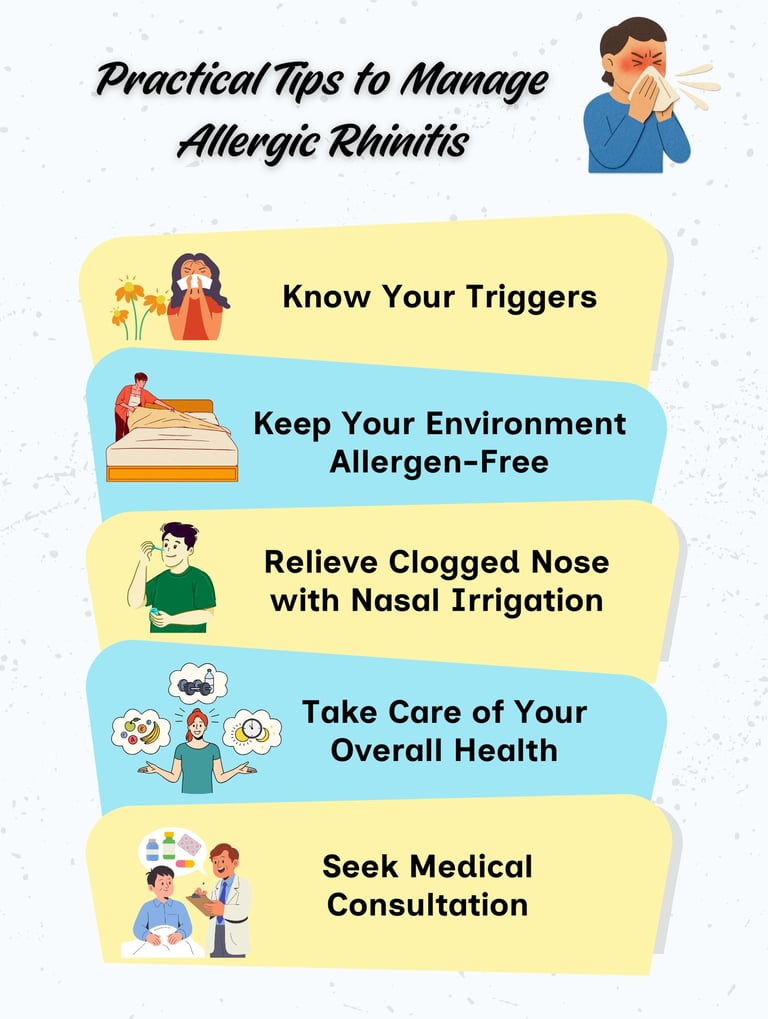
With my years of “struggle” with allergic rhinitis plus my nursing background, I've found the following strategies most effective to manage allergic rhinitis:
1. Know Your Triggers
The first step is to identify your specific triggers. My triggers include the cold weather, dust, and cockroach droppings.
Observing when your symptoms start to appear. Does it happen during cold mornings, after cleaning the house, or after touching a pet? Keep an “allergy diary” noting your symptoms, when they appear, and what you were exposed to.
Knowing what triggers your allergic rhinitis helps you take preventive actions, like limiting exposure or preparing medications when needed.
2. Keep Your Environment Allergen-Free
You can’t make the world free from the allergens that trigger your allergic rhinitis. But you can turn your home (or your bedroom) into your allergen-free sanctuary with the following simple ways:
Change and wash beddings weekly.
Dust regularly. Use a damp cloth instead of dry dusting to avoid spreading allergens into the air. It can also help to wear a face mask when cleaning.
If possible, invest in an air purifier for the bedroom.
3. Relieve Clogged Nose with Nasal Irrigation
A saline rinse can help clear the nose of allergens and reduce congestion. Over-the-counter saline sprays are available at drug stores. Just follow the instructions in the packaging. You can also make a saline solution at home by dissolving 1 teaspoon of salt in 2 cups of boiled water. Allow the solution to cool before using.
Here are the steps on how to do nasal irrigation:
Stand with your head over a sink or in the shower and tilt your head to the right.
Pour or squeeze the saline solution into the left nostril and into the drain. Breathe through your mouth, not your nose.
Repeat on the opposite side.
To avoid discomfort, do not let the water go down the back of your throat. To prevent this, adjust your head position until you find the correct angle.
Gently blow your nose into a tissue to clear out any mucus
4. Take Care of Your Overall Health
While allergic rhinitis is not infectious, strengthening the immune system can help with faster recovery and less severe symptoms. Take care of your overall health by eating a balanced diet, drinking enough water, exercising regularly, getting adequate sleep, and managing stress effectively.
5. Seek Medical Consultation
For persistent symptoms, consult your healthcare provider for proper evaluation and treatment. Consider consulting an allergist (also called an immunologist), a doctor who specializes in treating allergies. You may also undergo an allergy test to know exactly what allergens trigger your symptoms. Your doctor may prescribe or recommend over-the-counter medications, like antihistamines and decongestants, to relieve your symptoms.
Several years back, I saw an allergist and had a skin test to know what allergens trigger my symptoms. The doctor also recommended two types of antihistamines, which I can take when my symptoms flare up. One is a regular antihistamine, and the other one with no drowsiness effect, which I take when symptoms appear when I am working or outside.
Living With Allergic Rhinitis: A Few Uplifting Words
Living with allergic rhinitis can be frustrating, especially if it interferes with our daily routines. I understand—I’ve been there and still struggle at times. Remember, it is important to be kind to yourself during these sneezy times.
The right combination of prevention, home remedies, and medication can help manage allergic rhinitis symptoms. Listen to your body, rest, and do the remedies that work best for you.
You are not alone in this–there are many of us trying to manage allergic rhinitis. Those sneezes and itchy eyes cannot stop us from living our best life. We got this!
What strategies work well for managing your allergic rhinitis? I'd love to hear your thoughts. Feel free to reach out through my contact page.
Note: This post is for informational purposes only and is not a substitute for professional medical advice. Please speak with your healthcare provider about your specific health concerns.